
This article looks at the complexities of managing on-the-job training in highly regulated industries, with a checklist for tracking progress and completions, and staying audit-ready.
We also look at how you can leverage an LMS to track on-the-job training alongside elearning, and how we helped a high-profile client – Joby – to do exactly that in the high-consequence fields of both aviation and manufacturing.
In highly regulated industries, knowing the theory is rarely enough. Employees may need to demonstrate that they can apply procedures correctly, use specialist equipment safely and perform critical tasks under real working conditions.
This makes on-the-job training, often shortened to OJT, an essential part of workforce development. It also creates challenges that do not arise when training is delivered entirely through classroom sessions or elearning courses.
Organisations need to know not only whether someone has completed a course, but also whether they have been observed performing a task, who assessed them, which procedure was followed, whether the assessor was authorised and when the employee will need to be reassessed.
For organisations operating in areas such as aviation, manufacturing, healthcare and construction, these records may eventually need to withstand an internal investigation, customer review or regulatory audit.
A modern learning management system like the Totara Learn LMS can provide the structure needed to manage this more complex training environment. When configured around an organisation’s operational requirements, an LMS can bring formal learning, practical assessments, competency records and compliance reporting together within one auditable system.
What is on-the-job training?
On-the-job training is learning that takes place while an employee performs, practises or observes tasks within the real working environment.
Depending on the role, it may include:
- Shadowing an experienced employee
- Practising a procedure under supervision
- Operating machinery or specialist equipment
- Completing a practical demonstration
- Following a checklist or standard operating procedure
- Responding to a simulated workplace incident
- Being observed by a qualified assessor
- Receiving coaching and corrective feedback
- Demonstrating competence over several shifts or assignments
- Having practical skills formally signed off
OJT is particularly important where competence cannot be established through a written assessment alone. A learner might understand the correct sequence for inspecting a component, administering a treatment or operating a piece of equipment, but employers still need evidence that the person can perform the procedure safely and consistently.
Why managing OJT is more complex than managing conventional training
Classroom training and elearning generally follow a relatively predictable process. A learner is enrolled, attends a session or completes a course, takes an assessment and receives a completion record.
On-the-job training is more variable.
It may take place across multiple locations, involve different supervisors and require several observations before competence can be confirmed. The learner may need to complete prerequisite training, work under restrictions until authorised and repeat part of the process when equipment, regulations or procedures change.
Several additional questions therefore need to be answered (use these as a checklist):
- What practical task was completed?
- Where and when did it take place?
- Which version of the procedure was used?
- Who supervised or assessed the learner?
- Was that person qualified to carry out the assessment?
- What evidence was collected?
- Did the learner demonstrate full competence?
- Were any gaps or corrective actions identified?
- Is further supervised practice required?
- When does the authorisation or certification expire?
Without a structured system, answers can become dispersed across paper forms, spreadsheets, emails, local databases and individual managers’ records. This makes it difficult to obtain a reliable organisation-wide view of competence.
Managing OJT with audit trails in mind
In a regulated environment, recording that training “happened” is not enough. The organisation needs an audit trail that shows how competence was developed, assessed and approved.
A strong OJT audit trail should connect the employee to a specific task, assessor, standard, date and outcome. It should also retain any relevant evidence and show subsequent changes to the record.
Version control
Procedures change as equipment is upgraded, regulations evolve and organisations improve their working methods.
Training records should therefore identify which version of a procedure, checklist or competency framework was used during an assessment. Otherwise, an employee may appear qualified even though their training relates to an obsolete process.
When a significant change is introduced, the organisation may need to identify affected employees automatically and assign refresher training or reassessment.
Assessor competence
The credibility of an OJT record depends partly on the person approving it.
Organisations need to control who can assess particular tasks and confirm that evaluators hold the necessary qualifications, experience or internal authorisation. Their own certifications may also have expiry dates.
A suitable system should prevent, flag or report assessments carried out by people whose evaluator status is missing, inappropriate or no longer current.
Evidence of practical competence
Different tasks require different forms of evidence. A simple observation and digital sign-off may be sufficient for one activity, while another could require:
- A completed assessment checklist
- Written comments from the evaluator
- Photographs or documents
- Multiple successful observations
- Evidence collected on different shifts
- A final supervisor approval
- Remedial actions following an unsuccessful attempt
These records should remain connected to the learner’s training history rather than being stored separately.
Clear status definitions
Completion and competence are not always the same thing.
A learner may have completed the knowledge component of a programme but still be awaiting practical observation. Another employee may be permitted to work only under supervision, while a fully qualified colleague can work independently or assess others.
Useful status categories might include:
- Not started
- Theory training in progress
- Awaiting supervised practice
- OJT in progress
- Assessment required
- Further development required
- Competent under supervision
- Fully competent
- Authorised assessor
- Certification approaching expiry
- Reassessment required
These distinctions provide managers with a much more accurate picture than a simple completed or incomplete label.
Record retention
Training evidence may need to be retained for several years, including after an employee changes role or leaves the organisation.
Retention requirements will vary by industry, jurisdiction and type of record. The organisation should therefore define how long different forms of training evidence are kept, who can access them and how records are protected from inappropriate alteration.
Why classroom training alone is not sufficient
Classroom learning can be valuable for introducing regulations, explaining procedures and enabling discussion with an instructor. However, it cannot always demonstrate that a learner can perform a physical or operational task.
A classroom assessment may confirm that someone knows what they are supposed to do, but not that they can do it correctly under workplace conditions.
Practical competence can depend on factors such as:
- Using equipment confidently
- Following a procedure in the correct sequence
- Recognising hazards in the real environment
- Communicating with colleagues
- Responding to unexpected situations
- Maintaining accuracy under time pressure
- Applying judgement where a situation is not clear-cut
These capabilities need to be observed rather than inferred from attendance at a course.
Why elearning alone is not sufficient
Elearning is highly effective for delivering consistent information, preparing employees for practical activities and checking their understanding.
It can help learners understand safety rules, equipment, processes and decision-making before they enter a live working environment. Simulations and scenarios can also provide valuable opportunities to practise judgement without creating operational risk.
However, online training cannot fully replace practical experience where employees must interact with real machinery, patients, vehicles, materials, tools or workplace conditions.
The strongest approach is often blended learning:
- Elearning introduces the required knowledge.
- An assessment checks understanding.
- The learner observes an experienced colleague.
- The learner practises under supervision.
- A qualified evaluator observes performance.
- Evidence and feedback are recorded.
- Competence is approved or further development is assigned.
- Refresher training and reassessment are scheduled where required.
The challenge is making sure these stages form one connected training journey rather than a collection of disconnected activities.
Industries where OJT is essential
Manufacturing
Manufacturing employees may need to operate machinery, follow production processes, inspect components, handle hazardous materials and respond to equipment failures.
Although elearning can explain operating principles and safety requirements, practical competence must usually be demonstrated on the relevant equipment.
Manufacturers may also need to manage different requirements for individual sites, production lines, products and job roles. Changes to machinery or standard operating procedures can create an immediate need for retraining.
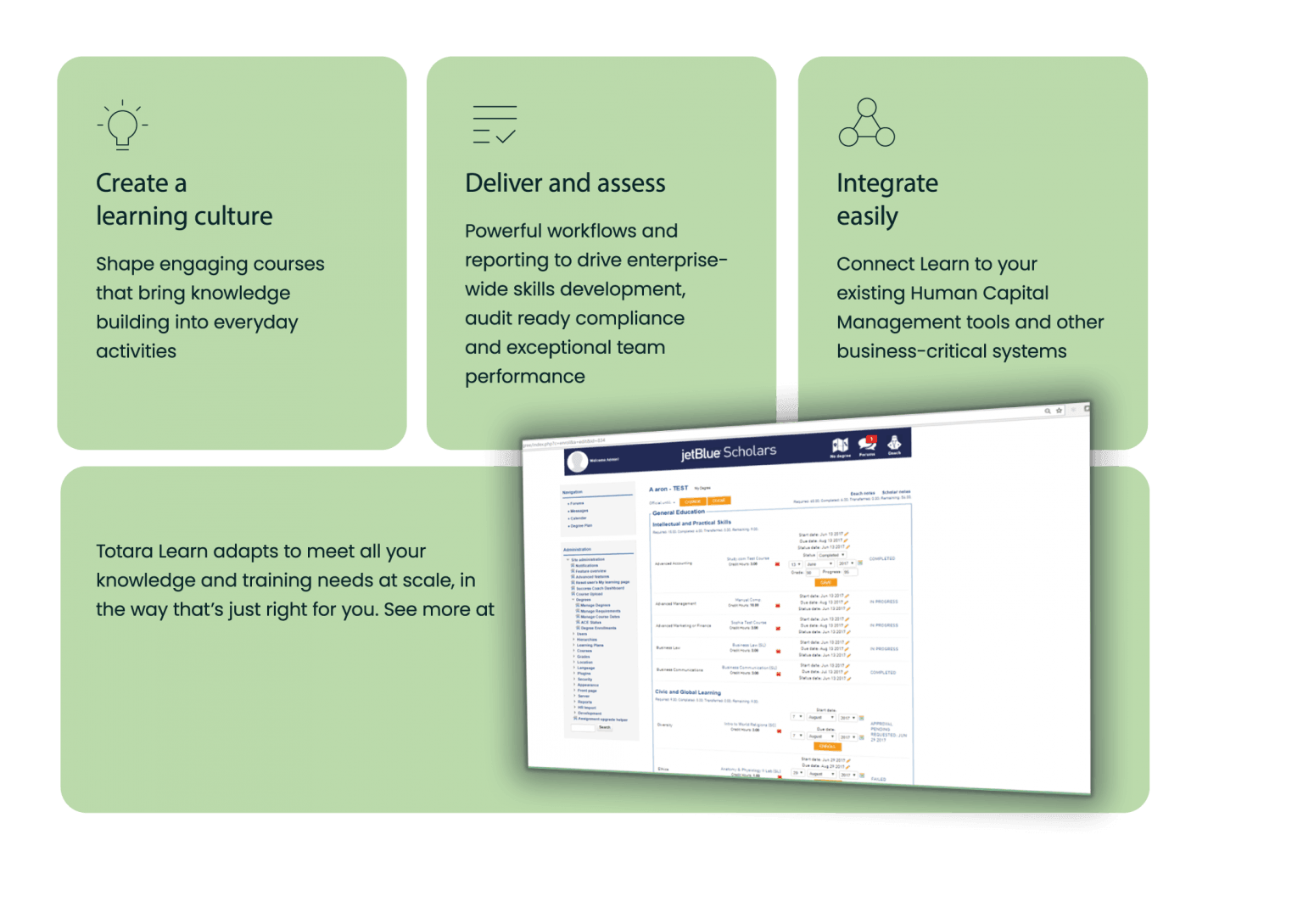
An LMS for manufacturing can help connect role-specific learning with practical competency records, certifications and detailed reporting.
Aviation and aerospace
Aviation is an especially high-consequence environment. Employees may work with complex aircraft systems, maintenance procedures, production processes and tightly controlled documentation.
Small deviations can have significant consequences, making consistent evaluation and reliable evidence particularly important.
Training teams may need to track practical tasks across sites, control evaluator permissions, manage changing procedures and demonstrate a clear line of accountability from training assignment to final authorisation.
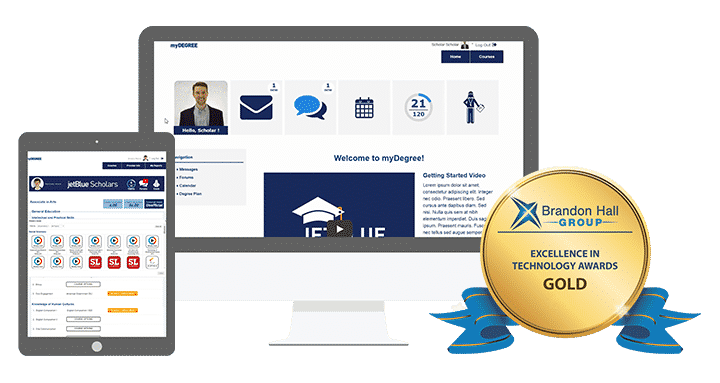
Related: read another case study for this sector – an award-winning LMS for JetBlue Airways.
Construction and engineering
Construction workers frequently need to demonstrate competence in the use of tools, vehicles, lifting equipment and specialist machinery. They may also need practical training in working at height, confined spaces, isolation procedures or emergency responses.
The workforce can be spread across temporary sites and may include employees, agency workers, contractors and subcontractors. This makes it difficult to maintain a current view of who is qualified to perform each activity.
Mobile access and centralised competency records can help managers verify training before assigning people to safety-critical work.
Healthcare and social care
Healthcare professionals must apply knowledge while working with patients, equipment and clinical procedures.
OJT may cover activities such as infection control, medication processes, use of medical equipment, moving and handling, safeguarding and emergency response. Competence may need to be observed several times and approved by an appropriately qualified practitioner.
The system also needs to accommodate different professions, departments, locations and scopes of practice while protecting sensitive information.
Medical devices and life sciences
Employees working with medical devices, pharmaceuticals and other life science products may need practical training in production, inspection, documentation, quality control and equipment use.
Training must often align with controlled procedures and quality management systems. When a procedure changes, organisations need to determine who is affected and provide evidence that the new version has been understood and applied.

Related: read our case study for leading MedTech company, Medtronic.
Energy and utilities
Energy workers may operate in high-risk environments involving electrical systems, hazardous substances, heavy equipment and remote infrastructure.
Practical authorisation can depend on role, location, equipment type and previous experience. Some tasks require periodic reassessment, while others may only be performed under specific supervision.
Transport and logistics
Drivers, warehouse employees, maintenance teams and ground operations staff all perform tasks that cannot be mastered through theory alone.
Practical training may cover vehicle inspections, loading, manual handling, hazardous goods, warehouse equipment, route procedures and incident response. Organisations need to connect these assessments with licence information, certifications and role permissions.
Food production and processing
Food manufacturers must train employees to follow hygiene, allergen, quality and production procedures consistently.
Elearning can communicate the rules, but supervisors may still need to observe whether employees wash, handle, clean, record and respond correctly within the production environment.
How a modern LMS can support on-the-job training
Many LMS platforms were originally designed around online course completion. Highly regulated organisations need a broader learning environment capable of tracking knowledge, experience, observation and competence.
A flexible platform such as Totara Learn LMS can be configured and extended to support blended programmes in which elearning and OJT contribute to the same learning record.
Role-based learning pathways
Employees can be assigned different training requirements according to their role, department, location, equipment or level of responsibility.
A pathway might combine:
- Online induction
- Compliance courses
- Classroom sessions
- Reading assignments
- Supervised practice
- Practical observations
- Manager approval
- Certification
- Scheduled reassessment
This gives learners and managers a clear view of what has been completed and what still needs to happen.
Prerequisite management
The LMS can help ensure that employees complete the required knowledge or safety training before beginning a practical activity.
For example, an employee might need to pass an online assessment before being eligible for supervised equipment training. They may then need to complete several observations before being authorised to work independently.
Digital observations and sign-offs
Supervisors can record practical assessments digitally instead of relying on paper forms or separate spreadsheets.
Depending on the configuration, they may be able to select an outcome, complete a checklist, add comments, upload evidence and approve the learner’s competency record.
Evaluator controls
Permissions can be used to determine which evaluators are allowed to assess specific competencies, teams or locations.
The organisation can also track the evaluator’s own training status and qualifications, helping to establish confidence in the assessment process.
Competency frameworks
Practical tasks can be mapped to role-based competency frameworks.
This makes it possible to see whether an employee is ready for a particular responsibility, identify gaps across a department and plan development for future roles.
Automated reminders and recertification
Where a practical qualification expires, the LMS can issue reminders and assign refresher activities or reassessment.
Managers can see upcoming expiries before they affect workforce availability, rather than discovering the problem when an employee is due to begin a task.
Dashboards and exception reporting
Managers do not always need another long completion report. They need to know where intervention is required.
Useful dashboards can highlight:
- Employees awaiting practical assessment
- Overdue observations
- Unsuccessful assessments
- Qualifications approaching expiry
- Learners working under supervision
- Teams with competency gaps
- Employees affected by a procedural change
- Assessors whose qualifications are expiring
This exception-based approach helps managers concentrate on risk.
Integration with HR and operational systems
Employee records can change frequently as people join, move between roles, transfer sites or leave the organisation.
Connecting the LMS with an HR system can automate enrolments and keep organisational information current. In some environments, learning records may also need to connect with quality, workforce planning or operational systems.
Audit-ready reporting
A well-configured LMS can provide a consolidated record showing:
- What training was assigned
- What the learner completed
- Which practical tasks were observed
- Who carried out the assessment
- When the assessment took place
- Which standard or procedure applied
- What evidence was collected
- Whether competence was approved
- When reassessment is due
This supports internal governance and makes it easier to respond to audits, customer enquiries and regulatory reviews.
Webanywhere’s compliance training LMS solutions are designed to help organisations automate and manage training, certification and recertification within a scalable learning environment.
Joby Aviation: managing OJT through Totara LMS
Joby Aviation is developing electric vertical take-off and landing aircraft and operates in a fast-moving aerospace environment where operational readiness and technical competence are critical.

As its technical operations scaled, Joby needed a more structured, accountable and traceable system for managing on-the-job training.
Its requirements included the ability to:
- Track hands-on training across different locations and teams
- Standardise how technical competencies were evaluated
- Manage version control as procedures evolved
- Control and monitor evaluator qualifications
- Track learner progress
- Maintain reliable audit trails for compliance and accountability
Webanywhere worked with Joby’s learning and development team to implement Totara LMS and enhance it with a custom-developed OJT plugin.
The resulting solution provides a clearer, centralised view of training for both compliance and workforce performance. It brings Joby’s elearning and practical training into a blended learning environment aligned with real operational requirements.
Read the full Joby Aviation on-the-job training case study.
Why custom LMS development can be important for OJT
Every organisation has its own definition of competence.
The number of observations required, assessment criteria, evaluator roles, approval stages and supporting evidence can vary considerably. Highly specialised organisations may find that the standard functionality of an off-the-shelf LMS does not reflect their operational process.
Custom development can bridge the gap between a general learning platform and the way work is actually carried out.
This might involve creating:
- Bespoke observation forms
- OJT workflows
- Evaluator dashboards
- Digital competency sign-offs
- Evidence-upload functionality
- Supervisor approval stages
- Role-specific status definitions
- Connections with controlled procedures
- Specialist reports
- Integration with operational systems
The objective should not be to reproduce an inefficient paper process digitally. It should be to create a controlled, usable workflow that improves visibility while reducing unnecessary administration.
Good practices for implementing an OJT management system
Start with the operational process
Before configuring the technology, map how employees currently move from initial learning to supervised practice and independent authorisation.
Identify where evidence is created, who approves each stage and what happens when an employee does not yet meet the required standard.
Define competence clearly
Assessment criteria should be observable and specific. Terms such as “understands the process” can be interpreted differently by different evaluators.
Where possible, define what successful performance looks like and what evidence is required.
Separate course completion from authorisation
Completing a learning activity should not automatically grant permission to perform a safety-critical task.
The system should distinguish between knowledge completion, supervised practice, demonstrated competence and formal authorisation.
Standardise without removing professional judgement
Checklists can improve consistency, but evaluators may also need space to record context, feedback and concerns.
The system should support informed professional judgement while ensuring that essential criteria are always addressed.
Make the process accessible at the point of work
Supervisors are less likely to record assessments promptly if they have to return to an office, locate a spreadsheet or complete a complicated administrative process.
Mobile-friendly workflows can allow observations to be recorded closer to the point at which they take place.
Plan for unsuccessful assessments
A learner who does not yet demonstrate competence should not simply receive a failed status.
The system should support feedback, further practice, corrective actions and reassessment while retaining the history of the earlier attempt.
Review reports with operational managers
Learning and development teams should work with operational, compliance and quality leaders to define the reports they need.
This ensures the LMS provides information that supports workforce decisions rather than only reporting course completion rates.
Building an audit-ready blended learning environment
On-the-job training is essential wherever employees must translate knowledge into safe and reliable performance.
In highly regulated industries, managing this training requires more than paper sign-offs or isolated spreadsheets. Organisations need to control prerequisites, procedures, assessors, evidence, competency status, certification and reassessment while maintaining a complete audit trail.
A modern LMS can provide the central structure for this blended approach. With the right configuration and custom development, it can connect elearning, classroom activities and workplace assessment within one coherent record.
As demonstrated by Webanywhere’s work with Joby Aviation, extending Totara LMS with functionality designed specifically for OJT can give organisations greater visibility over technical competence, compliance and operational readiness.
Learn more about Totara Learn LMS from Webanywhere, explore Webanywhere’s manufacturing LMS solutions or discover how an LMS can support compliance training and certification management.
Could we help you with a custom solution to manage on-the-job training? Contact us at Webanywhere.