Here’s a look ahead at some of the key features and benefits of Totara Version 20 that promises to make L&D easier for large organisations with complex learning structures.
In January 2026, Totara released Totara Learning version 20. Rather than introducing disruptive or experimental features, the V20 release focuses on refining how organisations manage, discover, and deliver learning at scale.
Practical evolution of the learning platform
Version 20 is a practical evolution of the platform, aimed squarely at organisations with large, diverse learner populations and complex learning structures. The emphasis is on usability, control, and flexibility, helping learning teams reduce friction for learners while retaining robust administrative oversight.
Smarter, more controlled learning catalogues
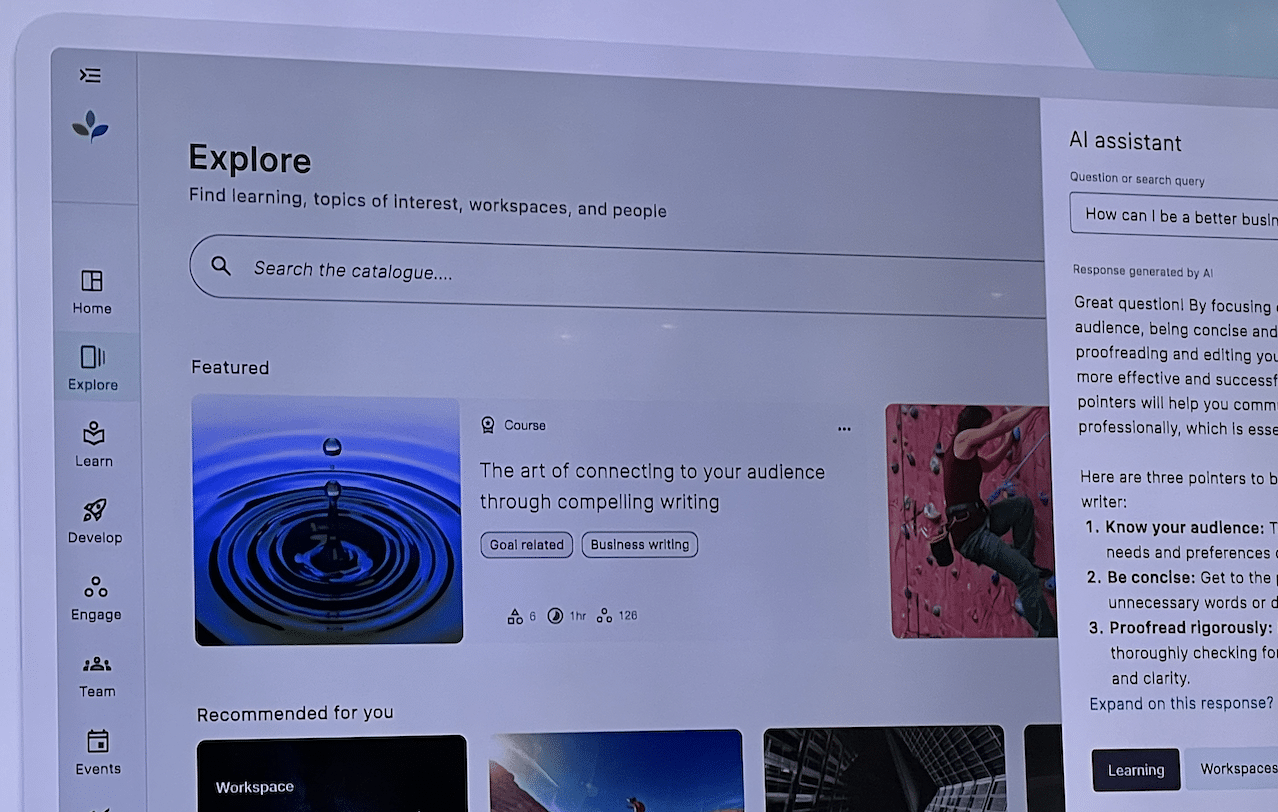
A key enhancement in Totara 20 is the improvement of learning catalogues at course level. Many organisations host extensive libraries of shared or generic courses, but not all of that content is relevant to every learner.
This release gives administrators greater control over course visibility, allowing catalogues to be tailored by role, programme, or organisational context. The result is a cleaner, more focused learner experience that avoids content overload and makes it easier for learners to engage with what actually matters to them.
Improved search and filtering across the platform
Search functionality has also been strengthened in Totara 20. Organisations now have more flexibility over how global search works, including which content types are searchable and how results are surfaced.
These improvements make it faster for learners to find courses, resources, and activities within large systems, while allowing administrators to align search behaviour with organisational learning priorities.
Greater flexibility for written assessments
Written assessments have been enhanced to give learning teams clearer control over submission rules. Organisations can now decide whether learners are allowed to resubmit work or whether submissions are final, supporting a wider range of assessment strategies.
Written resource activities have also been improved, making them easier to manage as part of structured programmes rather than isolated tasks. This supports more cohesive learning pathways and clearer progression for learners.
Clearer dashboards and reporting insights
Dashboards in Totara 20 have been refreshed to improve clarity for learners, managers, and administrators alike. The updates provide better visibility of progress, participation, and status without increasing complexity.
Profile status indicators have also been refined, helping learners understand where they are in their learning journey and what actions they need to take next.
Continued support for blended and offline learning
Blended learning remains a core strength of Totara, and version 20 builds on this with continued support for linking physical and digital learning experiences. QR codes can be used to connect in-person activities with online resources, whether learners are in classrooms, training centres, or remote environments.
The platform also supports preparatory and practice-based activities that do not require formal assessment, allowing organisations to track progression without forcing every interaction into a rigid completion model.
AI support, with clear safeguards
Totara V20 reflects a considered approach to AI-supported features. AI tools are available when working online, but are implemented with clear controls and safeguards, particularly around assessment integrity and learner support.
Importantly, the platform continues to distinguish between activities designed for assessment and those intended purely for learning, reflection, and practice. This reinforces Totara’s focus on workplace learning rather than purely academic instruction.
V20 – A practical step forward for enterprise learning
Overall, Totara Learning version 20 is less about radical change and more about making everyday learning easier to manage, easier to find, and easier to use. The update strengthens administrative control while improving the learner experience, making it especially valuable for organisations managing complex programmes at scale.
For learning teams, the Totara V20 release represents a meaningful refinement of an already powerful platform.
Why Totara Learning?
Totara Learning is designed for organisations that need flexibility, ownership, and control over their learning ecosystem. As an open-source, enterprise-grade platform, it allows organisations to tailor learning experiences to their structure, culture, and regulatory environment, rather than forcing them into a one-size-fits-all model.
 With strong support for blended learning, performance management, and workplace learning pathways, Totara is particularly well suited to complex organisations with evolving training needs.
Why Webanywhere?
Webanywhere is a long-standing Totara Platinum Partner with deep experience in designing, implementing, and supporting enterprise LMS solutions. We work with major organisations across the public and private sectors, delivering platforms that are scalable, accessible, and aligned with real-world learning needs.
 Our expertise spans LMS strategy, UX design, integrations, and ongoing optimisation, helping clients get long-term value from their Totara investment rather than just a technical deployment.
Talk to Webanywhere about Totara 20
If you’re planning an upgrade to Totara Learning version 20, or you’re exploring how Totara could better support your organisation’s learning strategy, Webanywhere can help.
From Totara design, development and implementation through to upgrades, optimisation, software integrations and support, we work closely with organisations to ensure their LMS is practical, scalable, and built around real learner needs.
Get in touch with Webanywhere >> to discuss how Totara 20 could work for your organisation, or to plan a smooth and supported transition to the January 2026 release.